Monday, July 26, 2010

Reading Moxley's "Fragments of a Broken Poetics"
As Teddy's been napping this morning I luckily stumbled across this lovely, keen, and provocative piece of aphorisms on poetry by Jennifer Moxley, whose work I admire. Here are some of my favorite passages with my own half-baked marginalia interspersed:
1
"The poet's psychology, visible only to the poet's friends, floats lightly over the surface of the poem. It discolors some words temporarily, but never quite settles into them—provided those words belong together. If so, they will eventually cast off this shadow; if not, it will eventually smother them. Thus, it is the poem, not the poet, that we love. Through it the singular becomes shared, the transitory eternal."
-What a superb response to the problematic relationship between poet and poem.
8
"The idea of audience is a nuisance born of the need for spectacle. Poems haunting the precarious dialectic between existence and extinction do not need it. Their magic is dependent on the private experience of separate individuals."
-Yes!
17
"Sleep, to whom Keats partly owes his "worthy rhymes," has long been kin to poetry. Saint-Pol Roux affixing a sign that reads "poet at work" to his bedchamber is the most playful example of this alliance. Both sleep and poetry open a passage to the unconscious, one by nature, the other by artifice. Both create memories of astonishing wakefulness, one through dream, the other through imagination. It is almost impossible to reproduce or transmit such experiences by other means."
-Yes, more or less, but I dislike the overly tidy distinction between nature and artifice... I don't know that either domain (sleep or poetry) rests purely in the realm of these two extremes. Is there not an art to dreaming? A wild, natural poetry?
"It is almost impossible to reproduce or transmit such experiences by other means."
-To my mind, it is impossible. It is where mimesis fails, which is why I find dream and poetry to be the most compelling states we can inhabit.
25
"Sometimes the poem has more friends than the poet."
-We can only hope so!
29
"There is a time in every poet's life when the mention of other writers, even if dead, is intolerable. It is a necessary rejection of the known text in favor of the not-yet-written. If things go as they should, this allergy will be only temporary. The lively mind will eventually find such closed antipathy boring and opt for openness instead."
-Don't I know it. Luckily all my allergies come and go...
28
"Poems demand a concentrated lingering to which we are unaccustomed. This is why they cause discomfort. When we stand still in one place, attempting to document and respect the details, we feel as vulnerable as a small creature in an open field beneath avian predators. Rapid and sequential page turning gives us a sense of progress and accomplishment, relieving us from the double threat of frustration and impatience."
"concentrated lingering"--getting harder and harder to do!
29
"Language has no weather, and therefore is not, strictly speaking, an environment."
-Hmmm. I really want to quarrel with this one. Maybe J.M. and I have different ideas of what weather would mean for language. I tend to equate weather with mood (don't ask why, just a bad pathetic fallacy tendency I suppose--though I don't think of it so literally, i.e. gray sky doesn't equal sadness)--I mean that mood is a kind of psychological weather. And think perhaps the most important aspect of a poem is its mood. So for me poetry can work as a kind of psycholinguistic "weather".
34
"I once wrote, 'those who think poetry is working, are laboring under a misconception.' By which I meant that the mental activity of writing a poem sabotages the mechanized reproduction of culturally programmed cognition: work-a-day thought is put to a stop. "
-Hell yes.
37
"The trick with fashion is to sit it out."
-An excellent reminder!
41
"After a point, even the poem can grow bored with its own devices."
-I hate it when that happens. That's when it's time for a coffee break or a bike ride.
45
"A great deal of overlap notwithstanding, the poem's knowledge is never quite identical to the poet's. Poets understand the intention behind their poems, and may even recognize the outcome, but there is always a remainder they cannot foresee and, indeed, may never detect."
-Couldn't agree more. This is why we need poems--we can get at that remainder no other way.
1
"The poet's psychology, visible only to the poet's friends, floats lightly over the surface of the poem. It discolors some words temporarily, but never quite settles into them—provided those words belong together. If so, they will eventually cast off this shadow; if not, it will eventually smother them. Thus, it is the poem, not the poet, that we love. Through it the singular becomes shared, the transitory eternal."
-What a superb response to the problematic relationship between poet and poem.
8
"The idea of audience is a nuisance born of the need for spectacle. Poems haunting the precarious dialectic between existence and extinction do not need it. Their magic is dependent on the private experience of separate individuals."
-Yes!
17
"Sleep, to whom Keats partly owes his "worthy rhymes," has long been kin to poetry. Saint-Pol Roux affixing a sign that reads "poet at work" to his bedchamber is the most playful example of this alliance. Both sleep and poetry open a passage to the unconscious, one by nature, the other by artifice. Both create memories of astonishing wakefulness, one through dream, the other through imagination. It is almost impossible to reproduce or transmit such experiences by other means."
-Yes, more or less, but I dislike the overly tidy distinction between nature and artifice... I don't know that either domain (sleep or poetry) rests purely in the realm of these two extremes. Is there not an art to dreaming? A wild, natural poetry?
"It is almost impossible to reproduce or transmit such experiences by other means."
-To my mind, it is impossible. It is where mimesis fails, which is why I find dream and poetry to be the most compelling states we can inhabit.
25
"Sometimes the poem has more friends than the poet."
-We can only hope so!
29
"There is a time in every poet's life when the mention of other writers, even if dead, is intolerable. It is a necessary rejection of the known text in favor of the not-yet-written. If things go as they should, this allergy will be only temporary. The lively mind will eventually find such closed antipathy boring and opt for openness instead."
-Don't I know it. Luckily all my allergies come and go...
28
"Poems demand a concentrated lingering to which we are unaccustomed. This is why they cause discomfort. When we stand still in one place, attempting to document and respect the details, we feel as vulnerable as a small creature in an open field beneath avian predators. Rapid and sequential page turning gives us a sense of progress and accomplishment, relieving us from the double threat of frustration and impatience."
"concentrated lingering"--getting harder and harder to do!
29
"Language has no weather, and therefore is not, strictly speaking, an environment."
-Hmmm. I really want to quarrel with this one. Maybe J.M. and I have different ideas of what weather would mean for language. I tend to equate weather with mood (don't ask why, just a bad pathetic fallacy tendency I suppose--though I don't think of it so literally, i.e. gray sky doesn't equal sadness)--I mean that mood is a kind of psychological weather. And think perhaps the most important aspect of a poem is its mood. So for me poetry can work as a kind of psycholinguistic "weather".
34
"I once wrote, 'those who think poetry is working, are laboring under a misconception.' By which I meant that the mental activity of writing a poem sabotages the mechanized reproduction of culturally programmed cognition: work-a-day thought is put to a stop. "
-Hell yes.
37
"The trick with fashion is to sit it out."
-An excellent reminder!
41
"After a point, even the poem can grow bored with its own devices."
-I hate it when that happens. That's when it's time for a coffee break or a bike ride.
45
"A great deal of overlap notwithstanding, the poem's knowledge is never quite identical to the poet's. Poets understand the intention behind their poems, and may even recognize the outcome, but there is always a remainder they cannot foresee and, indeed, may never detect."
-Couldn't agree more. This is why we need poems--we can get at that remainder no other way.
Wednesday, July 21, 2010
Reveilles - Proofs!
Got the proofs for my first book yesterday. Very excited--Salt has done a lovely job on the design. Here's the cover:

Sunday, July 18, 2010
Arctic Poems
I'm just finishing reviewing/correcting a mock-up of my translation of selections from Vicente Huidobro's Arctic Poems. Thanks to Vieve and Sean at Toad Press. I'm very excited about this project--it's finally seeing the light of day after being buried on a hard drive for a few years!
One of my favorite passages:
Between the thicket
Plucked roses
light up the streets
One of my favorite passages:
Between the thicket
Plucked roses
light up the streets
Monday, July 12, 2010
Ride Report: Insain Terrain
Hands down this was the most difficult physical thing I have ever done. Not necessarily the most painful (I've broken bones, had knee caps come out, etc.), but definitely difficult because of the duration of the suffering. But I totally loved it and would do it again in a second. Tomorrow maybe? Maybe not...
So this is the ride: 123 miles in Southwestern Wisconsin, starting in Blue Mound, heading southwest to Mineral Point, dropping further south, and eventually coming back around in a counterclockwise direction up to Blue Mound with a final climb up the Blue Mound into the state park.
Doesn't sound like a big deal. I've already done a couple centuries this year & have been putting on a lot of fast miles over the past month, training with both my road club in Boston and a race team out here in Chicago. But these 123 miles include over 12,000 feet of hill climbing. How is that possible in a state without mountains? Well, it's very possible. The route is a constant up and down, so you're pretty much always ascending or descending. Most of the hills are between 100 and 400 feet. Not terribly high, but they accumulate and they can be pretty steep. The final climb, up the Blue Mound, is over 1000 feet with stretches averaging 15-18%. Brutal, plain and simple.
I woke up at 4 am, about 15 minutes before I set my alarm. Figured I was excited & there wasn't much sense in trying sleep an extra 15 min. The short drive from my parents' house in Madison to the Blue Mound State Park was quite lovely -- a lot of misty valleys & fields in the pre-dawn light. The group I was with got rolling about 6:20 (they let small groups go every 5 minutes or so, I think to avoid a mass peloton). Headed out doing my best to hold back over the first part of the ride. I knew it would be tough, though, as I always have a tendency to overdo it early. Today was no different. I stupidly attacked a few of the early climbs, knowing in the back of my head I'd pay for it later!
I felt great at the 35 mile rest stop and after the stop latched on with a couple of very fit dudes, one of which apparently did iron man competitions. They promised they weren't out for anything impressive, but after 15 miles or so I had to drop back. I could already tell I was going to be in for a long day.
I started feeling the first cramps in my right leg on the first climb out of the 65 mile stop in Darlington. Up to this point I had been pushing it, but felt comfortable all along. I'd say my average speed was around 19 mph. Boy would this drop!
I'd been in this situation before--cramps with a long way to go--and I know myself, I tend to cramp easily. So I did my best to find a comfortable rhythm and work it out. I took it as easy as possible on the climbs and tried to bomb the descents so I could work up momentum going from one hill to the next. I ended up doing a lot of the climbing out of the saddle because that position eased off on my groin/quad area which was where I was suffering.
I wasn't moving nearly as fast as at the beginning of the ride. The sun was beating down pretty bad at this point. It was around 90 degrees with hardly any shade since most of the roads were in wide open farm spaces. At about mile 85 I dropped my chain and it got jammed between the small chain ring and the bottom tube. Some friendly guys stopped and with a rubber glove that one of them gave me I managed to pull the chain out and reset it. Thank god he had the glove because I hadn't cleaned my chain in awhile and it was caked with grease. That was my only technical problem for the whole day. All told, not too bad.
I took a long break at the 95 mile rest stop--too long probably, but I wanted to wait for Nikki, Teddy & my parents who planned to meet me there, & it was motivational to see them. I spent most of the last 35 miles riding with a triathlete from Chicago. It was nice to have someone to set a pace with, and chatting definitely kept my mind off the pain and the intimidation of the final climb up the Blue Mound.
I hit the final climb alone, though, as I had to make a quick pit stop to appease the calls of nature just before the climb started. I alternated between spinning in the saddle and standing and mashing for most of the climb. I found a rhythm, a slow one for sure, and hung in there until I saw my mom and Nikki on the side of the road, maybe 100 meter from the crest. That was exciting! Even better, Teddy was on Nikki's back, and they ran beside me for a few meters. I was utterly zapped. Had the worst shoe burn ever, and wanted nothing more than to sit down and remain seated for a long period of time!
Some photos Nikki took of my last 100 meters or so. Caution: the rider doesn't look too pretty!


So this is the ride: 123 miles in Southwestern Wisconsin, starting in Blue Mound, heading southwest to Mineral Point, dropping further south, and eventually coming back around in a counterclockwise direction up to Blue Mound with a final climb up the Blue Mound into the state park.
Doesn't sound like a big deal. I've already done a couple centuries this year & have been putting on a lot of fast miles over the past month, training with both my road club in Boston and a race team out here in Chicago. But these 123 miles include over 12,000 feet of hill climbing. How is that possible in a state without mountains? Well, it's very possible. The route is a constant up and down, so you're pretty much always ascending or descending. Most of the hills are between 100 and 400 feet. Not terribly high, but they accumulate and they can be pretty steep. The final climb, up the Blue Mound, is over 1000 feet with stretches averaging 15-18%. Brutal, plain and simple.
I woke up at 4 am, about 15 minutes before I set my alarm. Figured I was excited & there wasn't much sense in trying sleep an extra 15 min. The short drive from my parents' house in Madison to the Blue Mound State Park was quite lovely -- a lot of misty valleys & fields in the pre-dawn light. The group I was with got rolling about 6:20 (they let small groups go every 5 minutes or so, I think to avoid a mass peloton). Headed out doing my best to hold back over the first part of the ride. I knew it would be tough, though, as I always have a tendency to overdo it early. Today was no different. I stupidly attacked a few of the early climbs, knowing in the back of my head I'd pay for it later!
I felt great at the 35 mile rest stop and after the stop latched on with a couple of very fit dudes, one of which apparently did iron man competitions. They promised they weren't out for anything impressive, but after 15 miles or so I had to drop back. I could already tell I was going to be in for a long day.
I started feeling the first cramps in my right leg on the first climb out of the 65 mile stop in Darlington. Up to this point I had been pushing it, but felt comfortable all along. I'd say my average speed was around 19 mph. Boy would this drop!
I'd been in this situation before--cramps with a long way to go--and I know myself, I tend to cramp easily. So I did my best to find a comfortable rhythm and work it out. I took it as easy as possible on the climbs and tried to bomb the descents so I could work up momentum going from one hill to the next. I ended up doing a lot of the climbing out of the saddle because that position eased off on my groin/quad area which was where I was suffering.
I wasn't moving nearly as fast as at the beginning of the ride. The sun was beating down pretty bad at this point. It was around 90 degrees with hardly any shade since most of the roads were in wide open farm spaces. At about mile 85 I dropped my chain and it got jammed between the small chain ring and the bottom tube. Some friendly guys stopped and with a rubber glove that one of them gave me I managed to pull the chain out and reset it. Thank god he had the glove because I hadn't cleaned my chain in awhile and it was caked with grease. That was my only technical problem for the whole day. All told, not too bad.
I took a long break at the 95 mile rest stop--too long probably, but I wanted to wait for Nikki, Teddy & my parents who planned to meet me there, & it was motivational to see them. I spent most of the last 35 miles riding with a triathlete from Chicago. It was nice to have someone to set a pace with, and chatting definitely kept my mind off the pain and the intimidation of the final climb up the Blue Mound.
I hit the final climb alone, though, as I had to make a quick pit stop to appease the calls of nature just before the climb started. I alternated between spinning in the saddle and standing and mashing for most of the climb. I found a rhythm, a slow one for sure, and hung in there until I saw my mom and Nikki on the side of the road, maybe 100 meter from the crest. That was exciting! Even better, Teddy was on Nikki's back, and they ran beside me for a few meters. I was utterly zapped. Had the worst shoe burn ever, and wanted nothing more than to sit down and remain seated for a long period of time!
Some photos Nikki took of my last 100 meters or so. Caution: the rider doesn't look too pretty!


Monday, April 26, 2010
Auden's "daydream College for Bards"
from his essay "The Poet & the City":
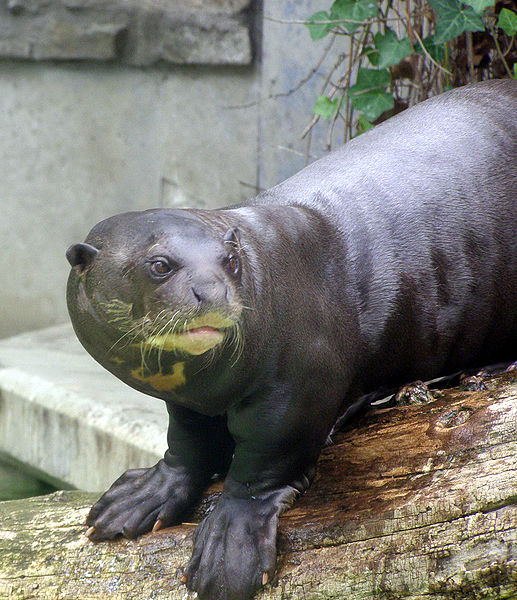
In my daydream College for Bards, the curriculum would be as follows:#5's my favorite. Especially if the domestic animal could be a friendly giant otter.
1) In addition to English, at least one ancient language, probably Greek or Hebrew, and two modern languages would be required.
2) Thousands of lines of poetry in these languages would be learned by heart.
3) The library would contain no books of literary criticism, and the only critical exercise required of students would be the writing of parodies.
4) Courses in prosody, rhetoric and comparative philology would be required of all students, and every student would have to select three courses out of courses in mathematics, natural history, geology, meteorology, archaeology, mythology, liturgics, cooking.
5) Every student would be required to look after a domestic animal and cultivate a garden plot.
Wednesday, April 14, 2010
Wednesday, March 10, 2010
Wednesday, March 3, 2010

Monday, March 1, 2010
How to make a book (1947)
I love the narrator's short declarative sentences. They are nice. Their rhythm lulls me. I am falling asleep.
Friday, January 15, 2010
Matthew Zapruder takes the useful idea of movement of mind to address what makes a poem and a poem even when it doesn't look like a poem: Zapruder article
Monday, November 2, 2009
Winter Fattening is in effect.
I'm participating in a new group writing "challenge." The same group of poets who put together Your Best Beach Body, the blog challenge to write a poem a day for 100 days, is now hosting Winter Fattening, a long poem challenge. I'm working on something in rime royal. That's about all I can tell you at this point.
Subscribe to:
Posts (Atom)