
Showing posts with label poetry. Show all posts
Showing posts with label poetry. Show all posts
Saturday, February 4, 2012
Wednesday, December 21, 2011

Monday, July 4, 2011
a dentist may indeed need a mop
I love epigrams and aphorisms, especially about poetry. I love them in two ways:
Way 1: if they're good, they give you a whole field to ruminate on. They shut you up and make you masticate a bit.
Way 2: they're fun to grapple with--to explore how they might play out in concrete terms, to quarrel with, to figure out whether I agree with them or not (usually back and forth in an interior monologue), etc.
Way 1 and Way 2 may be nearly identical. Not sure.
Anyhow, I was please to recently read Mark Yakich's "Yakking Points" which he wrote for his students & published in the Boston Review. I generally admire Yakich's work and admire poets who have the guts to throw general statements out there to the wolves. Being part wolf myself, I've copied some of Yakich's epigrams (in blue italics) and interspersed them with my inane commentary (I did a similar post on a piece by Jennifer Moxley last summer.)
*
Written language, especially poetry, is inherently a flawed translation of lived life. This sentence included.
I'm inclined to disagree with the premise here. I don't believe language translates life at all--this model of thinking necessarily incurs the "flawed copy" syndrome (i.e. Platonism). Rather, language intersects with life as a kind of force (of will, expression, enthusiasm, sorrow, etc). In its intersections it both influences life and is influenced by life.
*
Whenever you read a poem, read it out loud. Your ear will pick up more than your head will allow. That said, poetry had better be more than a medium for saying things in a pretty way. Poetry is more than ear candy.
I agree and I agree sort of. I mean, there's nothing wrong with ear candy. I'm waiting for the human so evolved that she can find her sustenance on candy alone. The underlying metaphor here is that poetry should be more "substantial," or provide better "sustenance" than candy. Well, I don't mind the emotional or spiritual sustenance that certain kinds of poems can supply, but I'm not ready to write off other more sugary delights.
But I agree in this regard: I can't stand "kiss me I'm poetical" work, poetry too in love with its own rhetoric, its own voice, its trills and riffs.
*
There is no hidden meaning, only “meanings” you’ve not yet realized are right in front of you because you’re not practiced in reading poems. Poetry is a convention like anything else. And you learn the rules of it like anything else—e.g., driving a car, baking a cake, fondling a lover.
Agree and disagree. I can't stand the notion that there's a hidden meaning waiting to be uncovered by readers who know how to cut through the rhetoric and wield their hefty analytical tools--the kind high school exercise that drives kids crazy. But on the other hand, suggesting that there are "rules" only begs to one to break them.
*
Although many consider figurative language the essence of poetry, for the life of a poet metaphor will sooner or later become an illness.
Cool point. Sometimes I think poetry itself is a kind of illness, a viral outbreak, a contagion that cannot be contained because it spreads by contaminating others with a kind of magnetic linguistic-musical-spiritual enthusiasm--like cells multiplying, poets divide and proliferate.
*
Literary theory is just another kind of literature.
Yep. I've been saying that for a long time.
*
Poetry is a form of prayer. Though most poets don’t know to whom or for what they are praying.
This is the kind of cheesy shit that gives poets a bad name.
*
The word “honest” in describing a poem is about as useful as a mop is to a dentist.
I don't know, after a particularly intense root canal, a dentist may indeed need a mop.
*
When reading a poem, try to come to it on its terms, not yours. Don’t try to fit the poem into your life. Try to see what world the poem creates. Then, if you are lucky, its world will help you re-see your own.
Yes. Good point.
*
You will gain a greater understanding of a poem by writing a single parody of it than by reading all the literary criticism of it.
Having tried both approaches, I'd say rather that one gains different understandings. But maybe understanding's not even the right term. Really, do we want to understand poems? No I'm not making an argument for hermeticism or obscuritanism -- but I think tuning ourselves to the right feeling of a poem is as important as "understanding" it. And good criticism, too, enhances one's ability to think and feel with a poem, not simply to understand it as a coded message. Rather, I think a part of me becomes the poem, or is becoming-poem x, and find the right way to plug into this model of feeling/becoming is what I want out of reading poems. In becoming-poem a reader follows the poem's trajectory which usually leads to surprises and transformations. Thus, I agree with Yakich's assertion that:
If your main claim to a poem is that you can relate to it, you aren’t reading it sufficiently. Poems are not meant to be related to; they are meant to offer you something you didn’t know, experience, or imagine before.
Monday, May 23, 2011
that inn(en)ervation of the heart

"Poetry is a magnetic innervation of the heart, which the being of Gérard Nerval kept all his life a cavern, one of the principle transmitting caverns of a void where all poetry is remade."
I have always loved this sentence which comes from a letter Artaud drafted but never sent to Georges LeBreton. I realized recently, however, that I've always misread "innervation" as "enervation."
Briefly, the OED tells us that innervation is "The action or process of innervating; the fact of being innervated; supply of nerve-force from a nerve-centre to some organ or part by means of nerves; stimulation of some organ by its nerves. Also, the supply of nerve fibres to, or disposition of nerve fibres within, an organ or part."
Meanwhile, a search for the the verb "enervate" pulls up several meanings--including obsolete usages to describe the literal cutting of tendons from animals. Here's the more common meaning, though, and one that plays nicely off Artaud's line: " To weaken mentally or morally; to destroy the capacity of (a person, a community, etc.) for vigorous effort of intellect or will. Said esp. of the effects of luxury or sloth. Also, to destroy or impair the vigour of (sentiments, expressions, etc.)."
If Artaud had meant enervate, would he have been channeling Baudelaire? Or rather, am I channeling Baudelaire in my misreading?
Wednesday, February 23, 2011
manoleria and voyager get through to me
A few books I'm currently excited by =

Daniel Khalastchi's Manoleria


Anna Maschovakis' I Have Not Been Able to Get Through to Everyone
Sunday, December 19, 2010
From Creeley's "Classical" (Memory Gardens)

"...oh youth, / oh cardboard cheerios of time"
then:
"One instant everything must always change,
your life or death, your articulate fingers lost
in meat time..."

Sunday, December 12, 2010
Best of 2010
I posted this "best of" list at No Tell Hotel's blog. I was thinking minimally at the time. Here are a few more I could have / should have also added to the list:
A Cloud of Witness, by Jason Stumpf
--excellent prose poems with a tight rhythmic backbone
Transcendental Studies, by Keith Waldrop
--the complete trilogy by the master of collage
The Cloud Corporation, by Timothy Donnelly
--this book is super hot shit right now, so my natural inclination is to try to be different & say, nah, it's not all that, but I'm really not different, I'm like everyone else, and man, it is all that
No, No Scary by Zachery Schomburg
--a fantastic follow up to The Man Suit, which was itself scary good
The Waste Land and Other Poems, by John Beer
--anyone crazy enough to use this title must be formidable. These talky, sharp poems take me back to sweet home Chicago
The French Exit, by Elisa Gabbert
--Gabbert's deft two-line stanzas are equal parts charm and dazzle as they swerve through observations, thought patterns, and reflections
Reveilles, by Nathan Hoks
--this guy's kind of narcissistic, but the poems aren't bad
I'm sure there's a lot of other good stuff I should add, but I'm still catching up with the best of 1983, so hey, 11 new titles is pretty good.
A Cloud of Witness, by Jason Stumpf
--excellent prose poems with a tight rhythmic backbone
Transcendental Studies, by Keith Waldrop
--the complete trilogy by the master of collage
The Cloud Corporation, by Timothy Donnelly
--this book is super hot shit right now, so my natural inclination is to try to be different & say, nah, it's not all that, but I'm really not different, I'm like everyone else, and man, it is all that
No, No Scary by Zachery Schomburg
--a fantastic follow up to The Man Suit, which was itself scary good
The Waste Land and Other Poems, by John Beer
--anyone crazy enough to use this title must be formidable. These talky, sharp poems take me back to sweet home Chicago
The French Exit, by Elisa Gabbert
--Gabbert's deft two-line stanzas are equal parts charm and dazzle as they swerve through observations, thought patterns, and reflections
Reveilles, by Nathan Hoks
--this guy's kind of narcissistic, but the poems aren't bad
I'm sure there's a lot of other good stuff I should add, but I'm still catching up with the best of 1983, so hey, 11 new titles is pretty good.
Tuesday, November 30, 2010
Ashbery and why to read poems
The lovely conclusion from Megan Snyder-Camp's compelling reading of "Paradoxes and Oxymorons":
Ashbery reminds me why I read poems. It’s not to understand a poet’s intentions, or to get to know the poet. It’s to savor the movement of mind that comes from fully engaging with a rich poem, and tracing the edges of structures whose echoes and ghost-images will appear at surprising intersections in the days ahead, working themselves through in my mind. Work, in that context—the work of bridging gaps, navigating a sharp turn, weighing one thing against another—feels like play. I get lost in it, I resurface, I dive back down. I show up muddy to lunch. I’m not trying to get exactly out of the poem what the poet put in; I’m certain that I won’t. What I get, rather, is exactly what I need, which shifts with each reading. I need a structure strong, engaging, and open enough to lead me beyond my own expectations into an exploration of what it truly means for one word, or idea, or person to connect to another—a chain of those connections strong enough, and flexible enough, to swing out over the vastness of possibility.I'm normally not one for reader response, but this seems like the way to go--especially her description of the mind working at the "edges of structures whose echoes and ghost-images will appear at surprising intersections in the days ahead," as if prescribing a kind of prescience to the poem that we meaningfully engage with. The chance play that forms our mental and imaginative destiny!
Friday, November 5, 2010
Book Launch
I will be giving a reading at Newtonville Books on Dec. 2 With Mark Conway & Jason Stumpf. Come on down.
Thursday, November 4, 2010
Reveilles in the blogosphere
Salt has posted a clip of me reading in promotion of the book as part of the blogs launching the Crashaw and Scott Award books.
Reveilles can be purchased here.
Reveilles can be purchased here.
Tuesday, July 27, 2010
Monday, July 26, 2010
Wednesday, July 21, 2010
Reveilles - Proofs!
Got the proofs for my first book yesterday. Very excited--Salt has done a lovely job on the design. Here's the cover:

Monday, April 26, 2010
Auden's "daydream College for Bards"
from his essay "The Poet & the City":
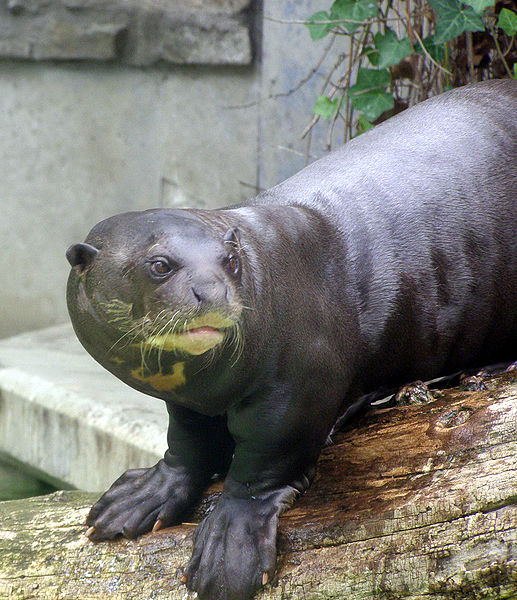
In my daydream College for Bards, the curriculum would be as follows:#5's my favorite. Especially if the domestic animal could be a friendly giant otter.
1) In addition to English, at least one ancient language, probably Greek or Hebrew, and two modern languages would be required.
2) Thousands of lines of poetry in these languages would be learned by heart.
3) The library would contain no books of literary criticism, and the only critical exercise required of students would be the writing of parodies.
4) Courses in prosody, rhetoric and comparative philology would be required of all students, and every student would have to select three courses out of courses in mathematics, natural history, geology, meteorology, archaeology, mythology, liturgics, cooking.
5) Every student would be required to look after a domestic animal and cultivate a garden plot.
Wednesday, March 10, 2010
Friday, January 15, 2010
Matthew Zapruder takes the useful idea of movement of mind to address what makes a poem and a poem even when it doesn't look like a poem: Zapruder article
Tuesday, September 1, 2009
Poetry Reading @ Weeks Footbridge, Cambridge, 8/31/09
Pictures from the celebratory reading capping off Your Best Beach Body, the 100 day poetry challenge my friend Sarah Green put together. Readers were: me, Leora Silverman, Sarah, and Thom McCaffrey. We read on the Eliot Foot Bridge crossing the Charles in Cambridge on a lovely late summer evening as the sun set in the background. There was a crowd of maybe 30 or so -- & a few curious passersby who stopped to check it out, as well.


Monday, June 29, 2009


Tuesday, June 23, 2009
The New Things

In his newest essay in the Boston Review Stephen Burt describes what he sees as a new enclave in American poetry. I like his attempt to carve out a third way, and I really like a lot of the poets he groups together under these common features:
The new poetry, the new thing, seeks, as Williams did, well-made, attentive, unornamented things. It is equally at home (as he was) in portraits and still lifes, in epigram and quoted speech; and it is at home (as he was not) in articulating sometimes harsh judgments, and in casting backward looks. The new poets pursue compression, compact description, humility, restricted diction, and—despite their frequent skepticism—fidelity to a material and social world. They follow Williams’s “demand,” as the critic Douglas Mao put it, “both that poetry be faithful to the thing represented and that it be a thing in itself.”However, I don't think any of these features are all that "new," and what I really object to is this ridiculous outmoded turn to objective representation. I'm not sure it's fair to unite the poets he reviews (or any poets) under this banner of fidelity "to the thing in itself." First, all poets as artists necessarily treat the poem as a thing--this stance is implied in any craft, so it should be a foregone conclusion. But then what's the deal with this turn toward naive mimesis*? I distrust the notions of "thingness," documentary accuracy and objectivity in poetry and in language in general. Faith in the representational function of language seems to entirely overlook the rift between language and the so-called objects in the world (our knowledge of which is highly problematic to begin with--i.e. how can we know the thing itself?--or are we all reverting to naive empiricism?). A sentence is not a moving picture. A noun is not a thing. Syntax does not convey the sense of being there. A verb does not perform a historical action. Language is a system overlaid on reality. Yes, it influences perception. Yes, it can provide reference points to the objective world--but as a poet and as a frequently confounded human, I for one find the "objective" world an utter mystery. This yellow wall in front of me: how its shade of yellow depends on the lamp I turn on or the time of day. How I can't look at it if I'm slightly nauseous. I can't impose a system as arbitrary as language over my experience with the wall and expect it to accurately communicate its existence in any phenomenological way. And the expectation that poetry should do such a thing is completely absurd. The existence of apparently "accurate" imagery in a poem does not make the poem any more faithful to material or social reality than surrealist juxtaposition. Imagery and accuracy are rhetorical & tonal devices just like sarcasm, irony, metaphor, etc. They just mask themselves in the invisible cloak of immediacy.
This rant has nothing to do with the poets themselves. I admire much of Armentrout's work. I absolutely love Graham Foust's books. Woodward, Massey and Johnston are all excellent poets. The thing in itself just strikes a nerve in me in myself.
*By the way, this simplification of WCW as the poet of things in themselves drives me crazy. Sure, he had a dictum about imagery (which is probably more in line with the workshop craft cliché "show don't tell"), but let's not let a slogan stand for an entire body of work that is is so diverse in tone and manner. "To Elsie" anyone? "Kora in Hell"? Even Patterson is more complicated than things in themselves...
Subscribe to:
Posts (Atom)