Thursday, March 17, 2011

Reading at Le Poisson Rouge


No that's not in France, it's in New York City. I'll be reading there as part of the InDigest 1207 Series this Sunday evening (3/20) at 7 PM with Jena Osman, Laird Hunt, & Melissa Broder. Details here (note my hilariously outdated bio--not my doing!). Swim on over if you can.

Sunday, March 6, 2011

Do you wish to be right?

Nothing is more unfitting for an intellectual resolved on practicing what was earlier called philosophy, than to wish, in discussion, and one might almost say in argumentation, to be right. The very wish to be right, down to its subtlest form of logical reflection, is an expression of that spirit of self-preservation which philosophy is precisely concerned to break down.
-Adorno, Minima Moralia

Consenus Reality


I do not advocate unquestioned consensus reality.

Saturday, March 5, 2011

What's in your brain?


un monstre montre son cerveau de verre calciné
voilà la vérité qui s'échappe au salut cordial

a monster shows his calcined glass brain
the truth that eludes cordial greetings

-Tzara, "Cinéma Calendrier du Cœur Abstrait Maisons"

Friday, March 4, 2011

Le Monocle de Mon Oncle


A monocle can do so many things for you. Provide focus. Magnify objects. Isolate an eye. Make the other eye feel left out. Flex your brow muscles. Make the monocled eye feel inferior. Create an image of distinction. Frighten away the creditors. Convey thoughtfulness. Serve as a model space craft. Glimmer. Start a fire. Mirror the face. Excuse a squint. Aid the brow's furrowing. Skew the face.

Tuesday, March 1, 2011

First Circle


The eye is the first circle; the horizon which it forms is the second; and throughout nature this primary figure is repeated without end. It is the highest emblem in the cipher of the world.
-Emerson, "Circles"

Thursday, February 24, 2011

Otters in the Ether, or: My Life as a Critical Paranoiac


If we're going to use the eye, we might as well misuse it:

...through a paranoiac and active process of thought, it will be possible (simultaneously with automatism and other passive states) to systemize confusion and to contribute to the total discrediting of the world of reality.
(Dalí, "Nouvelles Considérations Génénerales sur le Mécanisme du Phénomène Paranoïaque du Point du Vue Surréaliste," my translation)

The process is simple. One stares at something until one sees something new emerge. A formation of rocks becomes a soldier's head; a light-bulb becomes a glowing fist; or like the famous Michelangelo example, the cracks in the wall form the outline of a new continent.

As annoying as Dalí can be, the articulation of the paranoiac-critical method was a valuable contribution to surrealism. The act of seeing becomes an act of revision, a manipulation of sense data. Some say it is merely an extension of Ernst's frottage, nonetheless, Dalí's critical paranoia puts this new kind of seeing in the realm of everyday experience and banal imagery.

The paranoiac-critical method works in language, too: In the word scissors I find "the science of swords." In inquiry I hear "the choir requires ink." Irrigate "opens on an iris." Another can only be "otters in the ether."

Wednesday, February 23, 2011

manoleria and voyager get through to me

A few books I'm currently excited by =

Manoleria


Daniel Khalastchi's Manoleria


Cover Image
Srikanth Reddy's Voyager

I HAVE NOT BEEN ABLE TO GET THROUGH TO EVERYONE, Anna Moschovakis


Anna Maschovakis' I Have Not Been Able to Get Through to Everyone

Tuesday, February 22, 2011

Malady of the Visual


Mine eyes are made the fools o' the other senses

Or else the all-knowing floating camera, big-brother of my brain. Or else, this organ of expenditure:

The eye, at the summit of the skull, opening on the incandescent sun in order to contemplate it in a sinister solitude, is not a product of the understanding, but is instead an immediate existence; it opens and blinds itself like a conflagration, or like a fever that eats the being, or more exactly, the head. And thus it plays the role of a fire in a house; the head, instead of locking up life as money is locked in a safe, spends it without counting, for, at the end of this erotic metamorphosis, the head has received the electric power of points.
--Bataille, "The Pineal Eye" (trans. Stoekl)

Sounds painful. It's too much head. Let's get out of there:

Is it really so sad and dangerous to be fed up with seeing with your eyes, breathing with your lungs, swallowing with your mouth, talking with your tongue, thinking with your brain, having an anus and larynx, head and legs? Why not walk on your head, sing with your sinuses, see through your skin, breathe with the belly....
--Deleuze & Guattari, A Thousand Plateaus (trans. Massumi)


A nonprogram, a nonmethod, toward the "derangement of all the senses" via a "derangement of all the organs." An utterly delirious and fantastic mania Let's write poems with the spinal cord instead of the hands! Let me kiss you with these nerve-endings. Wait that's what I do already. I'm always drinking through fingernails, hobnobbing in the kneecap, funneling with the esophagus.

Saturday, February 19, 2011

Surrealism and the Visual

...I consider verbal inspirations infinitely richer in visual meaning, infinitely more resistant to the eye, than visual images properly speaking. Whence my constant protest against the poet's so-called "visionary" power. No, Lautréamont and Rimbaud did not see, did not experience a priori what they described; which is tantamount to saying that they didn't describe it at all, but rather that they limited themselves in the dark corridors of their being to listening--indistinctly and, while they wrote, without understanding them any more than we do when we first read them--to certain accomplished and accomplishable works. "Illumination" comes afterward.
-Breton, "The Automatic Message" (trans. Polizzotti)
This passage comes toward the end of "The Automatic Message," a long essay in which Breton, in 1933, assesses the relative failures of automatic writing and yet continues to advocate for its potential usefulness in achieving aspects of the surrealist agenda.

Breton's point flies against the grain of so many assumptions about writing, assumptions which rest upon a representational model of art. Think of imagism. Think of some aspects of objectivist writing. Think of your first creative writing class. Think of something as recent as Donald Revell's "Art of Attention: The Poet's Eye" or Stephen Burt's "New Thing." These aesthetics tend to adhere to a model in which language conveys an objective sight and in which the task of poetry is to re-present some imaginary or real "visual" picture.

Breton insists rather that a poet listen, not look; that she be attuned to the ebb and flow of language. It is only in obediently following the rhythm of language's haphazard currents, streams, rivulets, etc, that "illumination" occurs.

Breton's notion closely aligns, for me at least, with Spicer's Martians. Writing poetry isn't about reproducing some aspect of visual perception. Fuck perception. The poet is tapping into signals, waves, rhythms, some of which come "from out there," others of which originate in the shadowy confines of the interior, a space many of us postmetaphysicals are frankly terrified to venture into.

Let's get out of this representational mess--let's drop the tired visual metaphors. It's true, we're an inveterate visual culture. We move with our eyes, we think with our eyes, we read with our eyes, we entertain ourselves with our eyes, we awaken with our eyes, we sleep with our eyes, we drink with our eyes, we poop with our eyes. The eye is wonderful; it's a lovely little orb full of aqueous humor and tiny blood vessels; it's got a cornea; it's got a
crystalline lens; it sits in a socket padded with fatty tissue. And thanks to all this, I'm treated to wonderful sensations. Pretty awesome.

I'm not disparaging the sense of sight or the eyeball itself. But in the realm of poetics I'm sick of it. And let me be clear: this isn't about imagery per se. I love that trick as much as anyone. It's about the orientation of the creative paradigm. Illumination comes afterward.

Friday, February 18, 2011

Field Trip

Back when I was into breeding orangutans I had this vision of a meadow of honey, an indication that it was time to move to a beachy location and bury the tools or toss them to sea if I could stand to look at it long enough.


As the moss garden began to overtake the barrels in the courtyard, another lutist jumped off the balcony. For the eggs had reinvented the original book.


Light accumulated in the frog pond. The portal began to shrink. Another translucent material effaced itself, milky shadows left lapping at the steps.

Thursday, February 17, 2011

Conceptual Writing


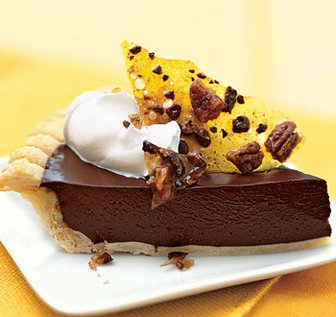
I feel about conceptual writing the way I feel about dessert: I like it. Sometimes I like it a lot. Sometimes, it's all I want to eat. I get a sugar high. It's awesome. Mmmm, fruits or nuts rolled in honey. I could drink this hot chocolate and eat raspberry cheesecake all day. Throw some chocolate chip/M&M cookies in there too. Sure, why not a pixie stick. Okay, I'll have some more angel food cake. Ice cream? Yes please!

But it isn't sustainable. And I get a stomach ache. And I feel like crap.

Okay, food isn't writing. But writing also isn't visual art, which is the problem with Kenneth Goldsmith's animating analogy in the introduction to Against Expression, an anthology of cakes, cookies, pastries, ice cream, pie, candies, and other forms of conceptual writing.

In the intro, Goldsmith argues that the internet has created a sea change moment for writing comparable to the effect that the invention of photography had on painting, divorcing painting from its supposedly mimetic ambitions and sending it waddling down the path to abstraction. Of course, if you talk to most contemporary artists, they'll chuckle at this archaic & simplistic narrative of modern art (Chuck Close anyone?).

Flawed analogy aside, Goldsmith's assessment seems dead-on: the digital age is fundamentally changing the way we use language--the processes of appropriation, collage, erasure, doctoring, splicing, mashing, control+c, control+v, etc, are probably almost second nature to poets of my generation & younger. But the inevitability of the self-assured, "grand narrative" avant-garde logic rubs me wrong. Collage does not necessarily lead to conceptualism.

Oh yeah, and another thing: concepts are boring.

Friday, February 4, 2011

Food Manifesto for the Future: an editorial so sensible, its advice is bound never to play out

Glissant


Edouard Glissant has died. I remember reading his Poetics of Relation in graduate school. I got interested in him as a kind of off-shoot from the research I had been doing on Césaire. The breathy way he develops concepts still blows me away. These are kind of prose-poem-concepts. Really lovely.

Wednesday, February 2, 2011

We live in a big place

Feeling over-important lately? My numerical brain stops working somewhere around 10,000, so multiplying these billions of solar systems by billions of galaxies just about short-circuited me for the night. Anyhow, this is fascinating: